A long-haired cat in full coat is a genuinely beautiful thing to live with, and also a daily responsibility. That ruff, those pantaloons, the plume of a tail — they collect tangles while your cat sleeps, walks, or simply sits still. Most at-home grooming goes wrong in a handful of predictable ways, and nearly all of them are easy to correct once you know what you're looking at.
Brushing the topcoat and calling it done
The slicker brush is the most over-trusted tool in cat grooming. It smooths the surface, which feels like progress, while a felted patch quietly tightens an inch underneath against the skin. You finish, your cat looks glossy, and three days later you find a solid mat under one armpit.
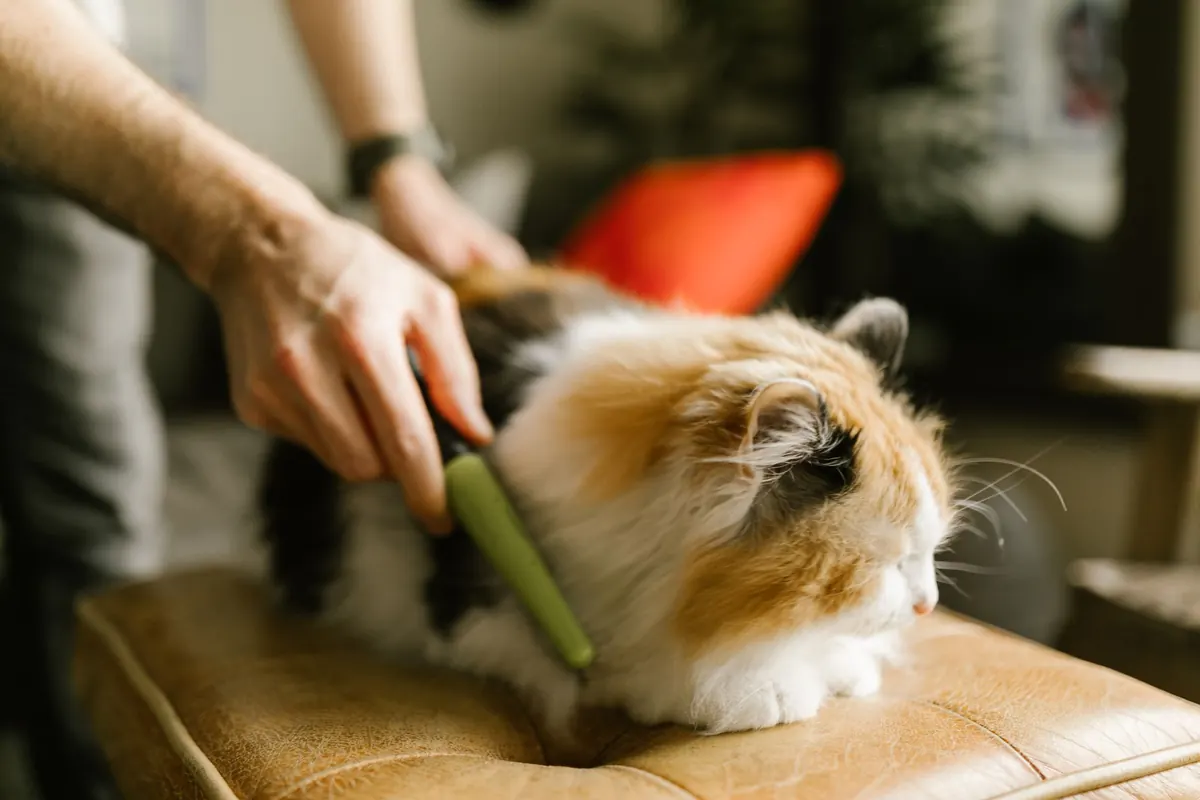
The fix is to comb, not just brush, and to comb in layers. Part the coat down the spine with one hand, then work a metal comb through the section you've exposed, moving from the skin outward. Release a little more hair and repeat. Pay attention to the places that mat first:
- Behind the ears and under the chin, where the collar and jaw rub
- The armpits and inner thighs
- The belly, especially on cats who flop for belly rubs
- The base of the tail and around the hind legs
- Anywhere a harness, sweater, or cone sits
Start with a wide-tooth comb and follow with a finer one. If the fine comb stops dead, there's still a tangle in there, no matter how smooth the top looks.
Waiting until you can see a mat
Small tangles loosen with a few seconds of gentle work. Mats do not. By the time a mat is visible from across the room, it's usually tight against the skin, pulling with every step the cat takes, and it can hide sores or irritated skin underneath.
Get your hands into the coat every day or two — a thirty-second check while your cat is sleepy on the sofa counts. When you find a tangle, don't yank it. Hold the hair between the mat and the skin so you're not pulling on the cat, then work from the outer tip inward with your fingers or a comb, a few strands at a time. Keep a jar of treats nearby and stop when the tangle loosens, not when the coat is perfect.
One warning here: never bathe a matted cat. Water and shampoo tighten tangles into felt, and a coat that was manageable on Saturday can be a solid shell by Sunday. Comb first, always.
Reaching for the wrong tools
A committed cat groomer's kit is small: a metal comb, a slicker or pin brush, blunt-tip nail trimmers, and cat-specific shampoo. Most injuries and most ruined coats come from the extras people add.
- Scissors near the skin. Cat skin is thin and loose, and it tents up into the blades easily. Even experienced groomers rarely use scissors flat against the body. If a mat must be cut out, slide a comb between the mat and the skin first, and cut above the comb.
- Human hair scissors on mats. They slip, they fold the hair, and they leave a chopped notch that looks worse than the mat did.
- Dull or hot clippers. A dull blade grabs and pulls. Clippers also heat up as they run, and a hot blade on thin belly skin is a burn waiting to happen.
- Rubber bands, elastics, and tight topknots. They pull, they break hair, and a left-on band can cut off circulation.
- Human detanglers and essential oils. Tea tree, citrus, eucalyptus, and many other oils are not safe for cats, who groom themselves by mouth. Stick to products labeled for cats.
Bathing far too often
Cats are fastidious self-groomers, and most long-haired cats need a full bath rarely — often only when they've gotten into something greasy or soiled, or when a veterinarian recommends it for a skin condition. Frequent bathing strips the natural oils that keep the coat supple, leaves skin dry and itchy, and creates static and friction that make tangles worse, not better.
When you do bathe, use a shampoo made for cats, warm rather than hot water, and a non-slip mat in the tub. Rinse thoroughly, because leftover shampoo residue is itchy and dulls the coat. Then towel dry and comb while the hair is still slightly damp, in small sections. If your cat has flaky skin, bald patches, or a persistent odor, that's a veterinary question, not a shampoo question.
Ignoring the stress signals
The single biggest reason home grooming fails is that people push through the point where their cat has already said no. Cats are subtle until they aren't, and the warning signs come in a reliable order:
- Ears rotating sideways or flattening
- The tail tip flicking, then thumping
- Pupils going wide in a bright room
- Skin rippling along the back
- A low growl, a hiss, or a sudden freeze
- Twisting away, tucking a paw, or trying to leave
Freezing is not consent. It's a cat holding still because moving feels riskier. Once you see any of these, stop, put the comb down, and let your cat walk away. End with a treat and a calm word, even if you only got one leg done. Ten good seconds today buys you ten good seconds tomorrow; a wrestling match costs you weeks of trust.
Sessions that run too long
New groomers tend to block out an hour, and that's where things fall apart. Two to five minutes is a real session for a cat who's just learning. Ten minutes is plenty for a settled adult. Work at the same time of day, in a quiet spot, after a meal rather than before one, and keep the tools out of sight until you're ready to start.
Break the job across the week instead of trying to finish it in one sitting: ears and head one day, back and sides the next, belly and hindquarters on a third. Cats accept short, predictable routines far better than occasional long ones.
A workable weekly routine
Run your hands over the coat daily and comb the high-risk spots — behind the ears, armpits, belly, tail base — every couple of days. Once a week, do a full line-combing session with a metal comb and finish with a brush for shine. Trim nails every two to three weeks, and check ears monthly.
If you find a pelt so tight you can't get a comb under it, or skin that looks red, broken, or damp beneath a mat, that's a job for a professional groomer or your veterinarian. Some coats need a shave-down, some skin conditions need treatment, and both are far easier to handle before the mat has been sitting for a month. Ask for help early; your cat will be more comfortable, and so will you.
Photo: RDNE Stock project / Pexels